1851

The Churchman’s Companion of 1851, Volume 10, pages 250-252, reported:-
“The village of Deopham, Norfolk, has long been known in its neighbourhood for its entire abandonment to Dissent of the lowest and most profligate kind. There has been no resident vicar within the memory of man, and only of late years a resident curate, and with no parsonage house, no school, no resident gentry, and the Church in sad repair — there seemed little prospect of any improvement ; we trust, however, that better days are now in store. The Rev. George H. Turner (late curate of S. Andrew’s, Holborn,) was last year presented to the living by the Dean and Chapter of Canterbury. Nothing could be more dreary than the appearance of the place on his arrival; but indefatigable zeal and self-devotion have quickly had their fruits. On Wednesday last an excellent and tastefully built school-room, with master’s house, close to the Church, was opened, while a parsonage house, near at hand, was seen rising high above the ground, and the internal arrangements of the Church, by a wonderful transformation, were found by experience to be well adapted for a solemn carrying out of the English ritual.”
“The sun shone brightly on a joyous gathering of old and young, and the choir of the adjoining parish of Hingham came over to assist in celebrating the occasion. At eleven o’clock a procession was formed in the school consisting of ten choir boys and as many men followed by the clergy in their surplices hoods and stoles. Having passed through a large congregation assembled in the nave, and taken their places, the clergy in the chancel and the choir on seats just outside, the service commenced. It was choral throughout. The prayers were said from a stall in the chancel by the Rev. Arthur Mozley, Curate of Hingham, and the Litany intoned by the Vicar at a faldstool under the chancel arch. The full harmony of the responses, with the hearty antiphonal chanting of the Canticles and Psalms, sounded through the arches and aisles of the Church as if they were greeting long forgotten yet familiar sounds. The Revs G Bousfield and Fothergill read the Lessons, standing near the faldstool, with the Bible in their hands there being as yet no lectern: and for the anthem and introit two hymns were sung from the “Selection of Ancient Hymns”, set to appropriate ecclesiastical tunes. Great credit is due to the efficient manner in which this amateur choir performed their part in the service. They were led by a well-toned harmonicum (Æolophon), played by Mr Staton, pupil of Mr Buck, organist of Norwich Cathedral; and, considering many difficulties they have in their own parish to contend with, they gave the greatest encouragement to the cause generally of Church music. The Vicar officiated at the altar during the first part of the Communion Service, the responses as well as much of the music used being taken from the “Parish Choir” and after the Nicene Creed the Rev. Algernon Wodehouse, Vicar of Odiham, Hants, proceeded at once from the sedilia to the pulpit, a new stone one, then used for the first time, and commenced with an invocation of the Trinity, a beautifully appropriate sermon from the text “Feed My lambs”. He urged the Church’s pastoral charge over her young members, made her children and Christ’s children by baptism. He referred to the state of degradation in which the children of that parish had been brought up, owing to the absence of any school, and commending the zeal of their Vicar to the good will and helping hand of his parishioners, he trusted that advantage would now be taken of the Church’s activity among them. After the sermon two clergy collected the offerings of the congregation in richly embroidered bags, and reverently laid them on the altar. The Eucharistic service was then proceeded with, the Hon and Rev. W Wodehouse, Rector Hingham and Rural Dean (by whom Mr Turner has been much assisted in all his efforts), being celebrant Priest. There was a numerous body of communicants who, by their reverent behaviour, showed that the day’s solemnities were not unappreciated.”
“An ample and tastefully-arranged luncheon was laid out in the school room at which a large and happy party sat down together including the children of the school, the choir, many of the poor inhabitants of Deopham, the church wardens, who rendered every assistance in their power to the occasion, the clergy, and several ladies, among whom were the Honourable Mrs W. Wodehouse, the Misses Wodehouse, Mrs F. Raikes, Mrs Arthur Mozley, Mrs George H Turner and her mother, Mrs Buckley. In answer to his health being drunk, Mr Turner gratefully acknowledged all the assistance he had received, and then explained in open-hearted and emphatic language that his desire in building the schools was to train up souls in the true Catholic principles of the Mother Church. No other religious teaching would be given to children in that school, for none other he believed to be good for them. After a few other appropriate healths to the preacher, the Rural Dean, the choir, &c., “GOD save the Queen” was sung, and all rose up. After strolling about for a time, they again assembled, by a spontaneous and unpremeditated sense of its fitness, for evening prayer at four o’clock. After which all took their departure, well satisfied with the day and full of hope for the future.”
“Deopham Church is a fine specimen of rural ecclesiastical architecture. The tower is singularly handsome of the Tudor age built of flint with highly finished masonry. There were remains of an illuminated chancel screen and also marks of there having been a second screen or rood loft one bay westwards across the whole Church nave and aisles parting off two chapels at the end of the aisles. It was impossible to retain the screen in the restoration owing to the decay of the wood and its broken state; fragments, however, were reserved of which an altar table has just been made. This being fresh illuminated and standing with its dais on Minton’s tiles has a striking effect. The rails are moved to the bottom of the steps a convenient arrangement for aged communicants and it also gives height to the altar. Much remains to be done. The east window is yet an eyesore which we trust will be in time made right. The expenses however have fallen so heavily on the Vicar who has no one to help him in the parish, that he cannot without assistance from other parts, at once do the things which seem most requisite.”
Extracts from this article also appeared in the
- Church & State Gazette (London) 19th September 1851
- Liverpool Standard and General Commercial Advertiser, 23rd September 1851
There was no announcement in any papers local to Norfolk.
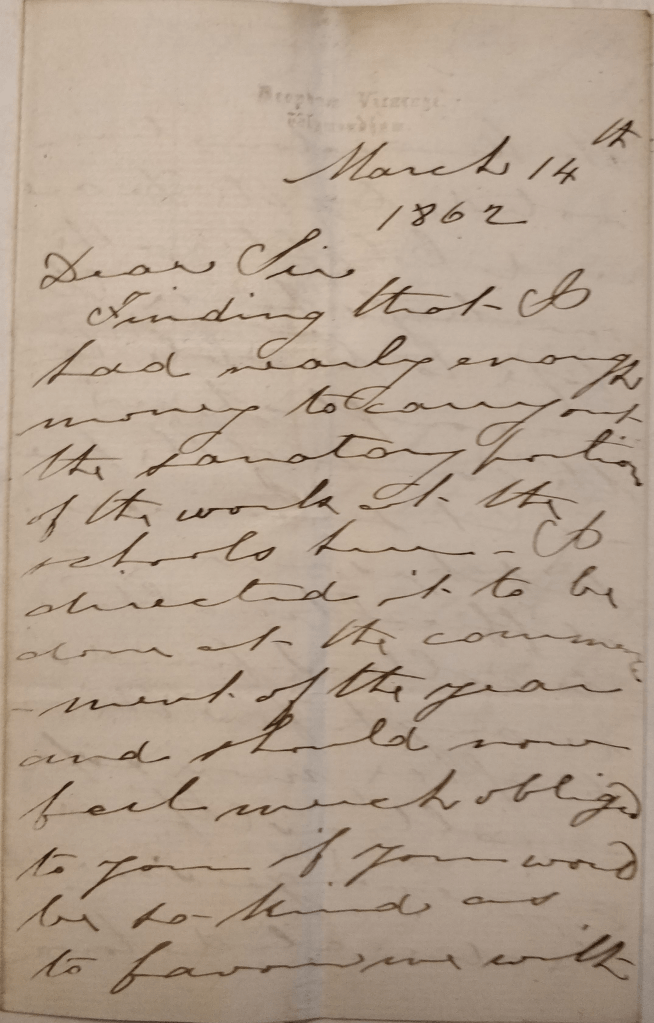
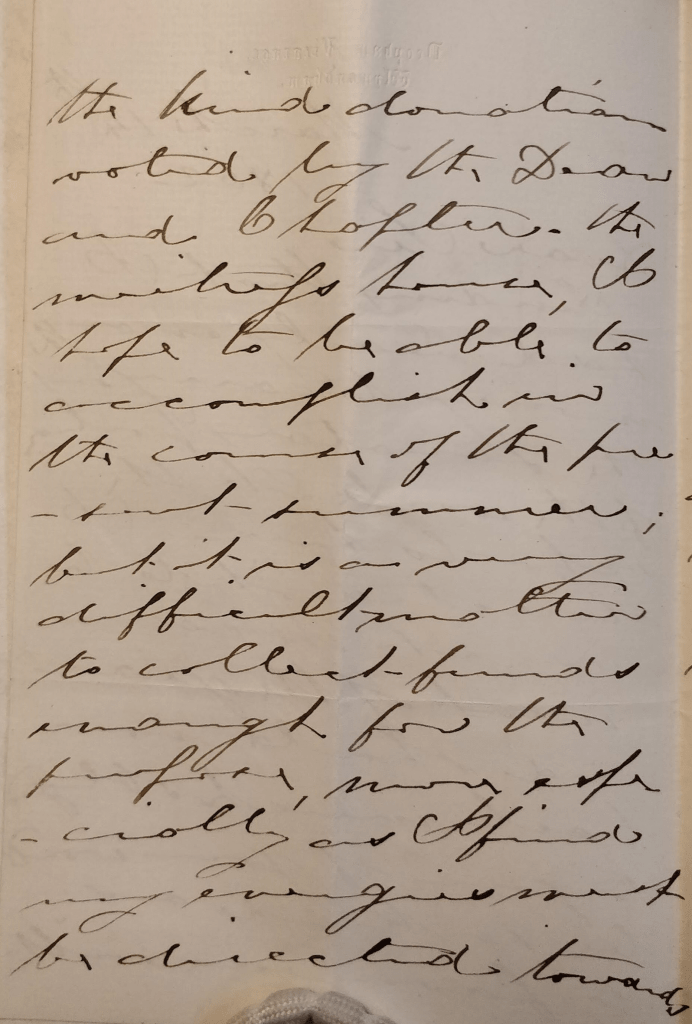
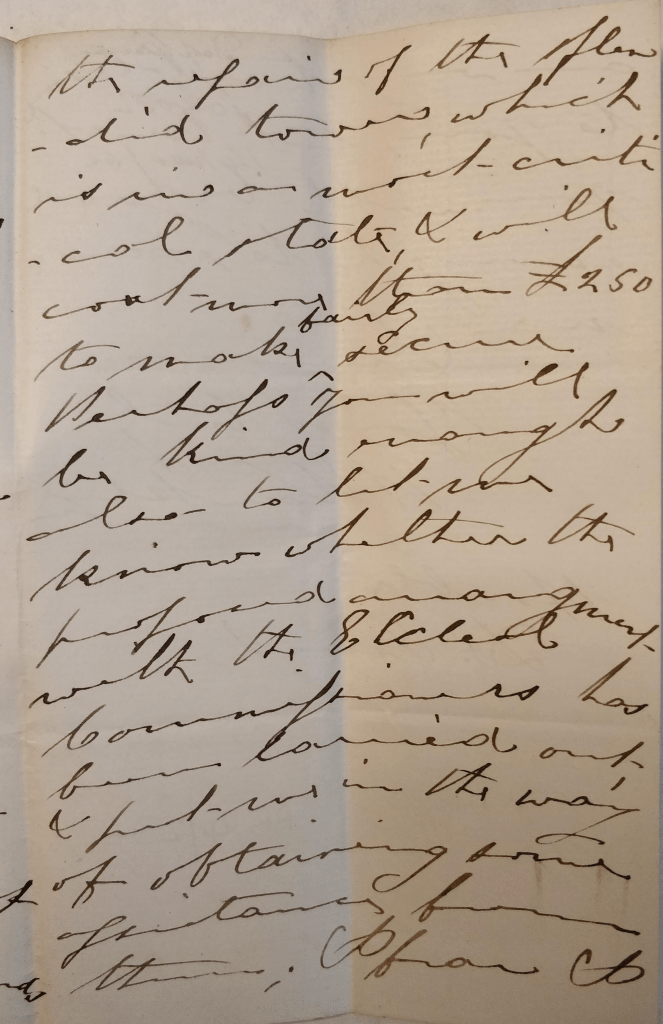
14/3/1862

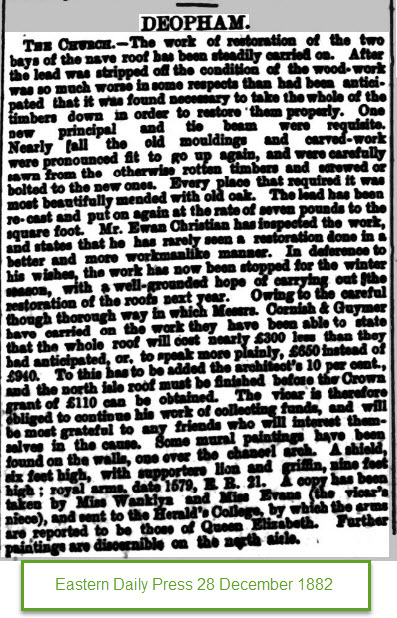
28/12/1882
30/04/1897
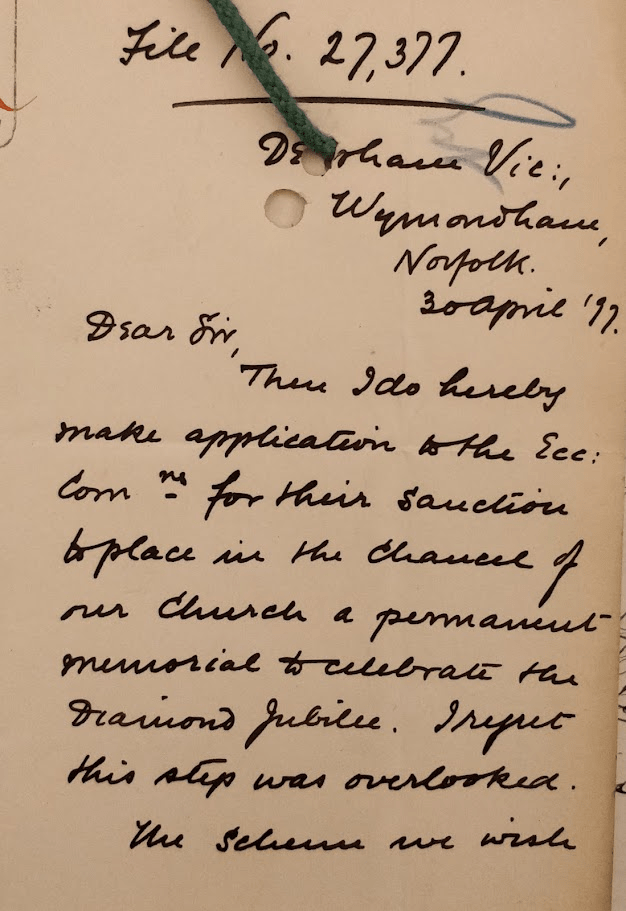

© Lambeth Palace Library
31/12/1913
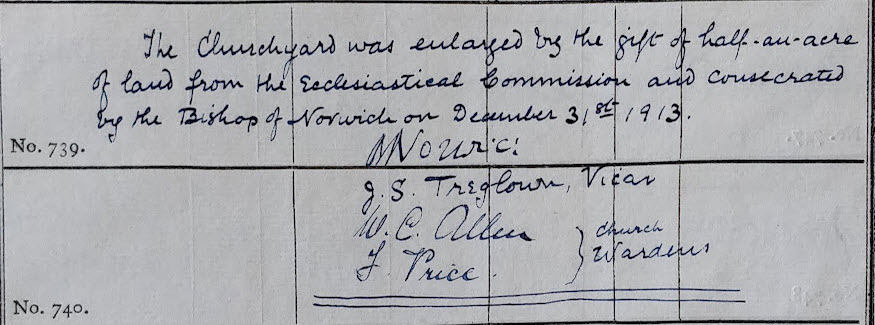
All rights reserved by Norfolk Record Office who hold the original; their ref is NRO PD 485/6, Pg 93
1934

All rights reserved by Norfolk Record Office who hold the original; their ref is PD 485/21
15/4/1954
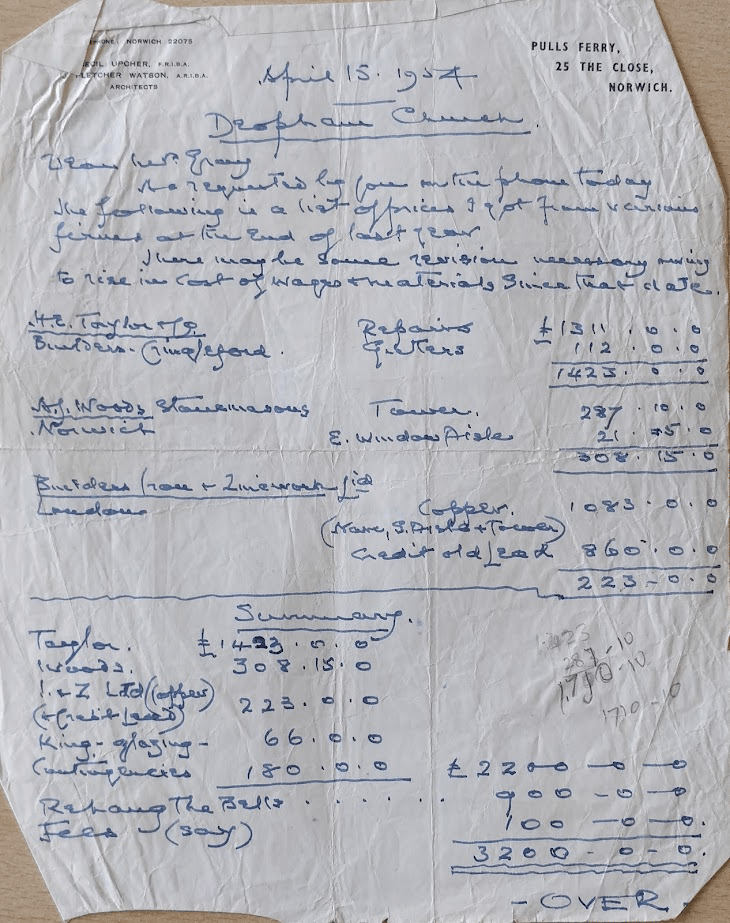

All rights reserved by Norfolk Record Office who hold the original; their ref is PD 485/21
2/1/1956

All rights reserved by Norfolk Record Office who hold the original; their ref is PD 485/21
1/2/1961
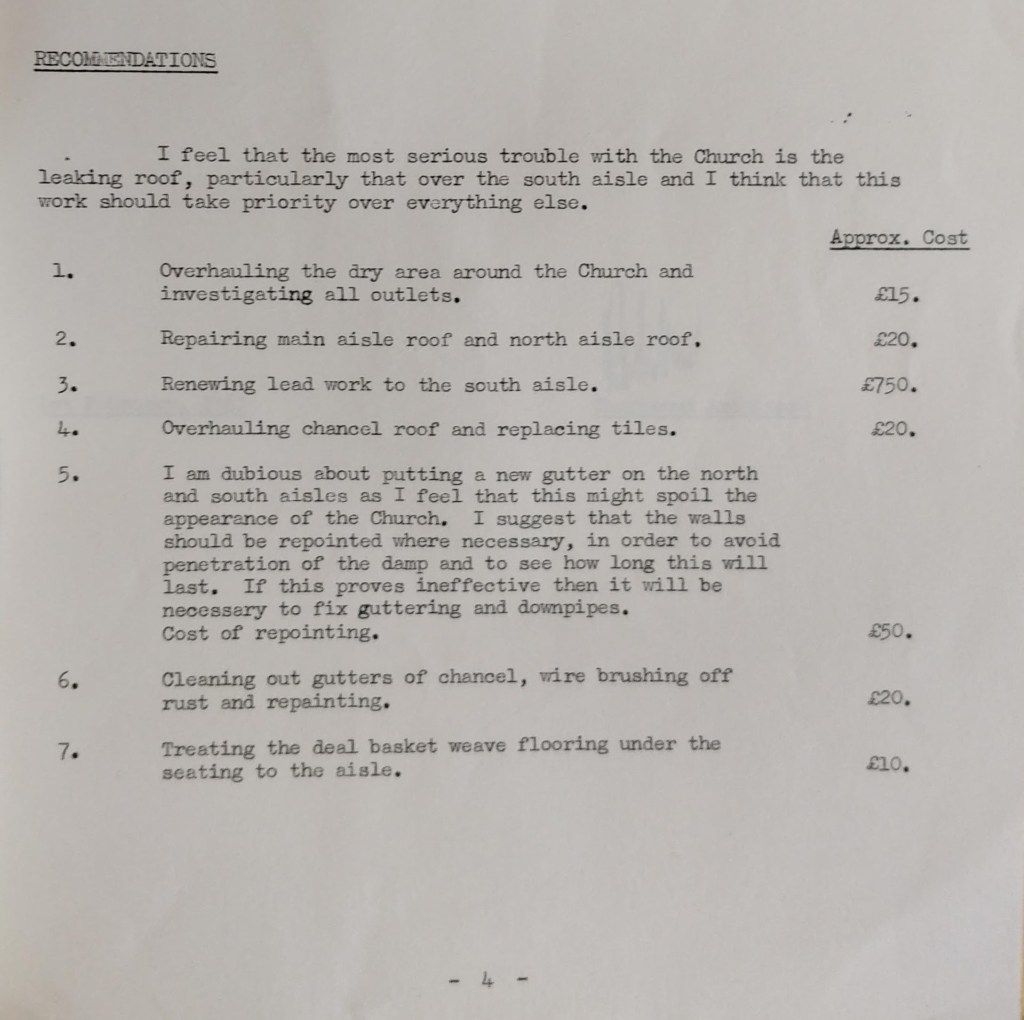
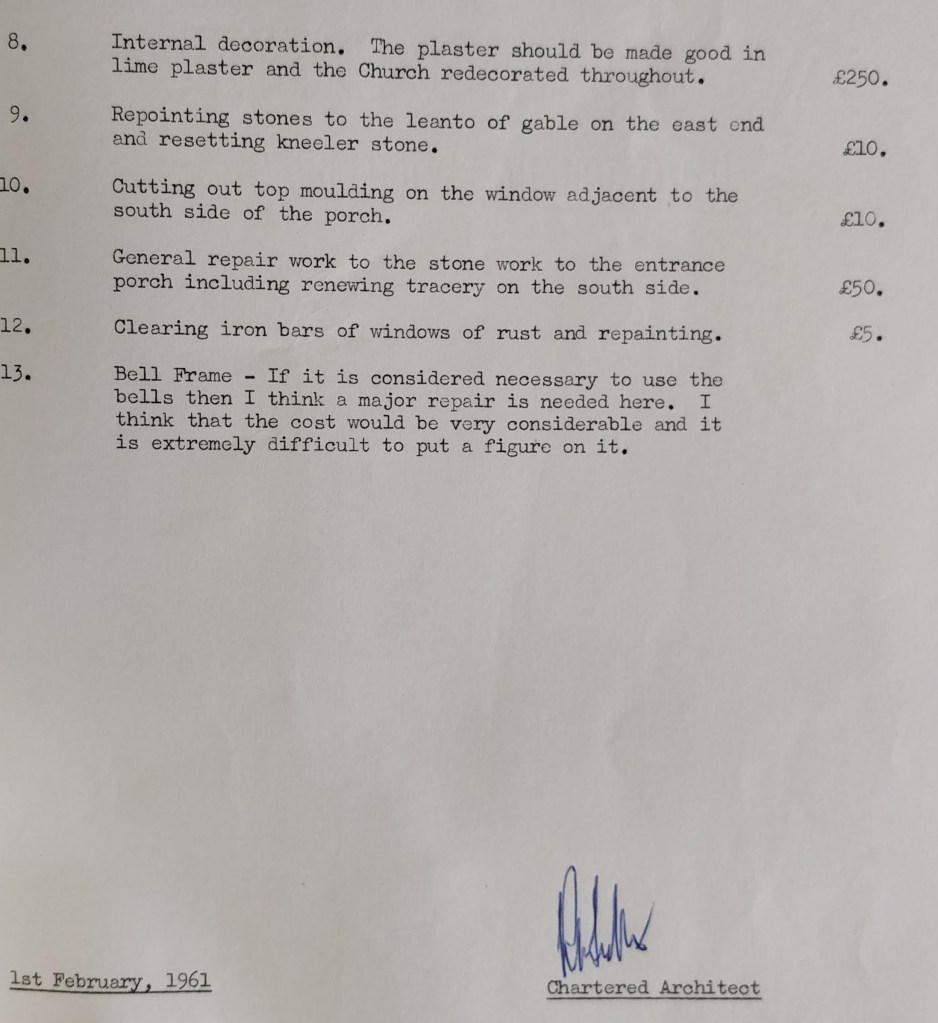
All rights reserved by Norfolk Record Office who hold the original; their ref is NRO PD 485/22
8/6/1961

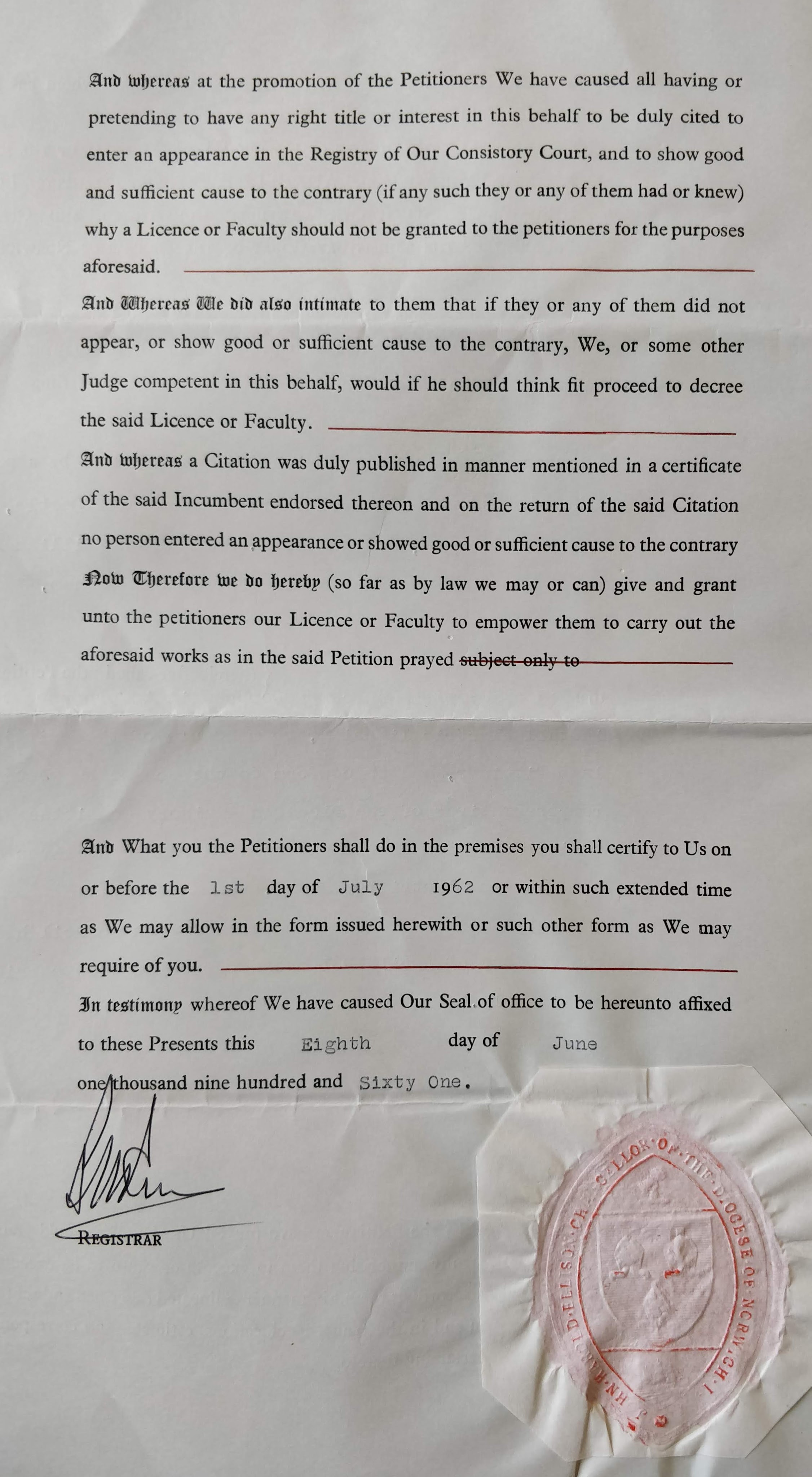
All rights reserved by Norfolk Record Office who hold the original, Ref PD 485/20
5/11/1974
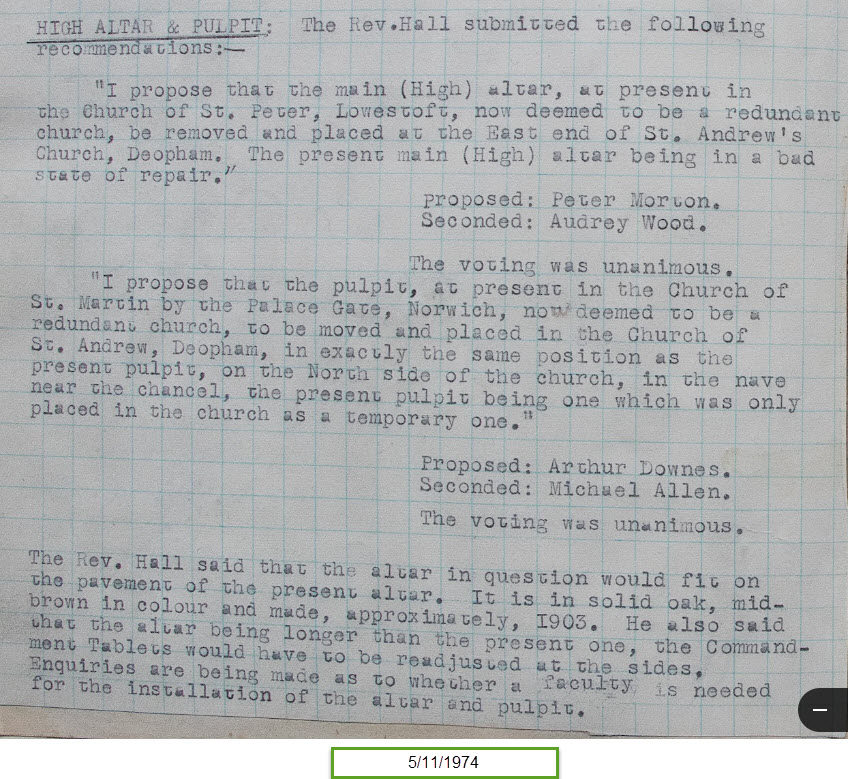
Reproduced with permission from Deopham Church
17/11/1974

Reproduced with permission from Deopham Church
| Date | Change |
|---|---|
| 2/12/23 | Minutes of 17/11/1972 |
| 5/11/23 | 14/3/1862 letter |
| 29/10/23 | 1974 PCC Minutes re pulpit, choir stalls & altar |
| 27/10/23 | Updated Churchman’s Companion reference |
| 16/8/23 | 1934 quote, 15/4/1954 estimate and 2/1/1956 account |
| 3/7/23 | First Quinquennial – 1/2/1961 |
| 13/6/23 | Added churchyard extension 1913 |
| 4/12/22 | Published |
 Deopham History