Origins
According to an article in the Lynn New & Advertiser, the father of the Frank Law of Hingham Nurseries was a pioneer of the flower industry. He had moved from Manchester to Terrington St. Clement because the soot and grime in the polluted atmosphere of Lancashire was spoiling the blooms. There were already farms growing bulbs, particularly narcissi, when Law arrived in Terrington. He is recorded in the 1901 census living in Terrington, with his profession shown as “Bulb Grower and Nursery Man”.
His oldest son carried on the family tradition; according to his obituary, Captain Frank Law (junior) started up the Deopham business in 1940 after distinguished service in the first world war.
Chrysanthemums
Hingham Nurseries was run by Frank Law (who lived in Wymondham) from Mill Farm. They grew Chrysanthemums and tomatoes, and distributed bunches of willow at Easter.
The photograph shows Royal Tooke watering the chrysanthemums, with the turkey sheds in the background.
Ruth Palmer was an expert at keeping the pump that supplied the hose in working order.


The chrysanthemums were carefully boxed up at Mill Farm and then collected by lorries which took them to the markets and shops.
During the winter, the plants were brought into the greenhouses, and then cuttings were taken in the spring. Tomatoes, melons and cucumbers were then grown in the greenhouses once the chrysanthemums had been hardened off.
There was work at the nursery for children who helped with disbudding the stems to ensure the growth of a single robust flower on each stem.
The following two photos show ladies working at Mill Farm:
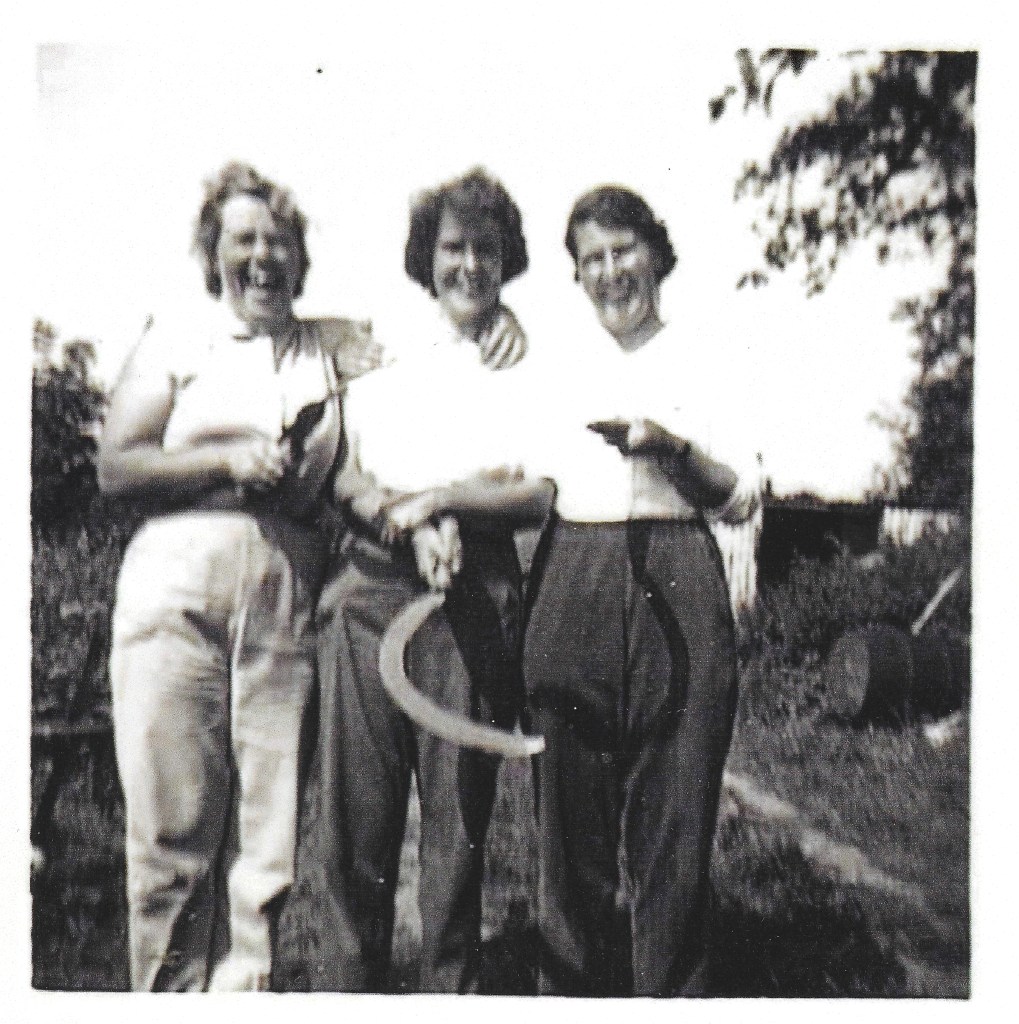
Left to right:
Mary Capes, Royal Tooke, Gladys Lloyd
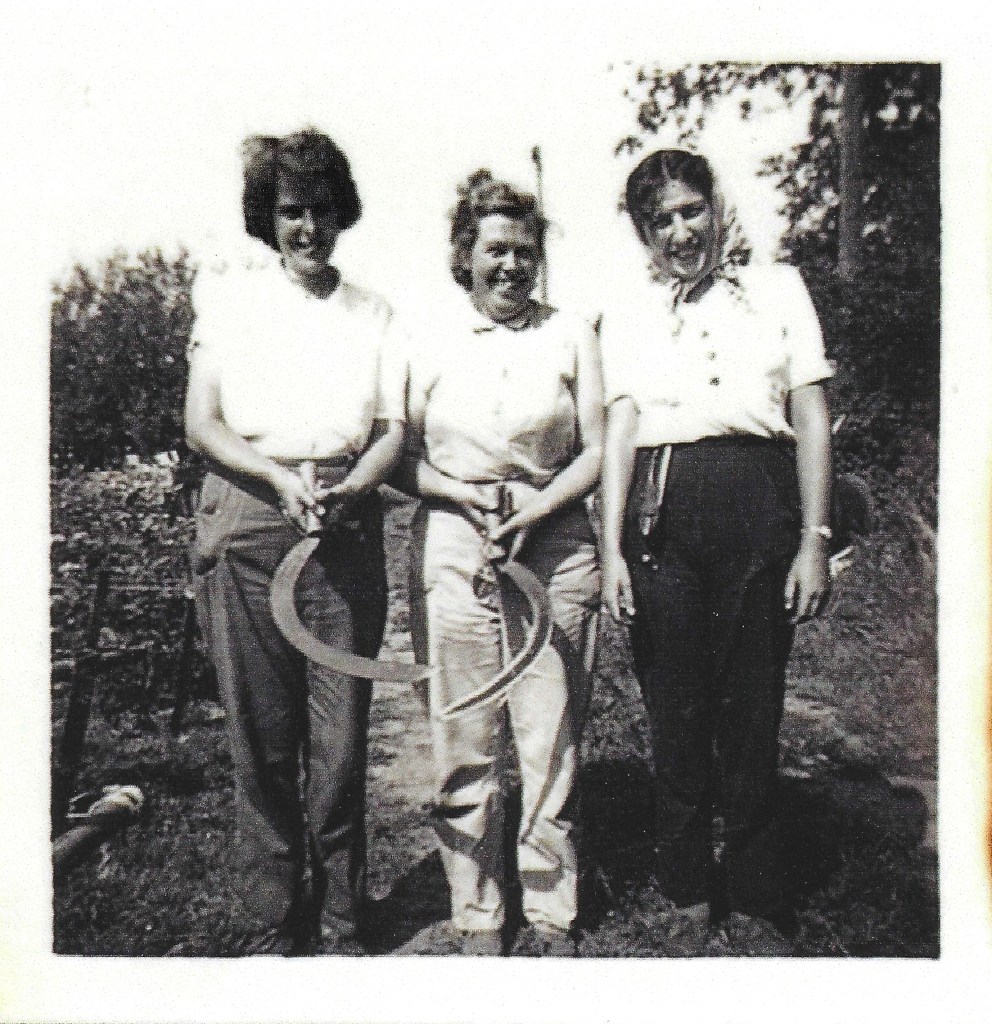
Left to right:
Royal Tooke, Mary Capes, Gwen Rostron
Photos: Wendy Eastell and Gwen Tooke
In addition to the chrysanthemums and willow, the business supplied bunches of narcissi, peonies and lilac, as well as making holly wreaths (for which Gwen Rostron was paid 6d per wreath).
Frank Law moved the business to Crown Farm when the Allens moved to Hall Farm, and is recorded there in the 1941 Farm Survey. This 1941 survey shows 21 acres devoted to growing flowers (daffodils, tulips and “other”).
Palm Sunday Willows
During the 1960s and 1970s, in the period leading up to Palm Sunday, the ladies of the village used to cut stems of willow. The business was run by Frank Law at Mill Farm (Frank Law lived in Wymondham); the willow was taken to a cool room operated by Jack Brown at Mill Farm. There they were bundled up, with the buds still not opened, and sent to London for the decoration of churches for Palm Sunday. They would also have been waved during the processions recalling the story of Jesus entering Jerusalem.

Since palms from the Holy Land were not available, the twigs and branches of willow with their grey furry buds had been authorised since mediaeval times for use in churches as an alternative. These were popularly known in the churches as “palm”. This also meant that sometimes the Sunday before Easter was known as Willow Sunday.
The willow that was cut in Deopham had distinctive red stems matching the red vestments prescribed to be worn by the clergy on Palm Sunday. The Deopham willow was grown on land belonging to Ruth Downes (née Palmer) in Low Common situated along the stream that runs behind Toad Hall, and also across the land behind where the house aptly named “The Willows” now stands. Whilst the mums were cutting the willow, the children would wade along the stream which was, Josie Bunn recalls, not very deep and and was crystal clear. Since the willow was cut every year, it never used to gain in height whilst this trade carried on. One of these trees is still standing (two came down in 2023). The ladies involved in cutting and bundling the willow included Royal Tooke, Gwen Rostron, Molly Leveridge, Dolly Phoenix, Gladys Burlingham and Norma Buckenham ( née Lofty).
In medieval times, during the early years of Deopham’s current church building, the priests were not allowed to take any chances with the greenery that was brought in for Palm Sunday. As well as the willow, this could include yew branches. In order to ensure that the greenery used in the church was purged of anything adverse, the greenery was sprinkled with holy water, doused with incense, then the following mantra was prescribed1 to be read (in Latin):-
I exorcise thee, O creature of flowers and leaves, in the name of God the Father almighty, and in the name of Jesus Christ his Son our Lord, and in the power of the Holy Ghost. Henceforth all power of the adversary, all the host of the devil, all the strength of the enemy, all assaults of demons, be uprooted and transplanted from this creature of flowers and leaves, that thou pursue not by subtlety the footsteps of those who hasten to the grace of God. Through him who shall come to judge the quick and dead, and the world by fire. Amen.
Thanks to Gwen Rostron, Doug Rostron, Josie Bunn, John Phoenix and John Fisher for information about this trade.
Footnotes
- The Sarum Missal translated from Latin to English by F.E. Warren. ↩︎
| Date | Change |
|---|---|
| 3/11/23 | Revised following conversation with Gwen Rostron |
| 12/2/23 | Published |
 Deopham History