Note: This page refers to Ivy Farm, Victoria Lane: for Ivy Farm, Stalland Lane, see here.
Contents
Introduction
The land on which Ivy Farm now stands was part of the Manor of Deopham Hall. As a result, there are records of transactions relating to changes of occupants in the manorial Court Rolls which have survived – starting from 1691 for this manor.
The account below is presented in chronological order although the starting point was the Court Roll for the Court of the Manor of Deopham Hall held on April 7th 1814. It is here that the link was first recorded between the pre-Inclosures name of “Berrys” and the post-Inclosure name of “Plots 28 & 29”. The point at which the buildings became known as “Ivy Farm” has not been identified.
N.B. this page refers to Ivy Farm in Victoria Lane: Ivy Farm in Stalland Lane is a separate and unrelated property.
1711 First reference to Berrys
Arthur Branthwaite junior acquired the “tenement called Berryes & 2 acres of copyhold land on which the tenement was built” (along with a package of other property in Deopham and Morley) at the Court of the Manor of Deopham Hall held on October 18th 1711. This property had previously been tenanted by John Styles who had inherited it from his father Edward Styles.
This is the earliest reference to Berrys and its two acres.
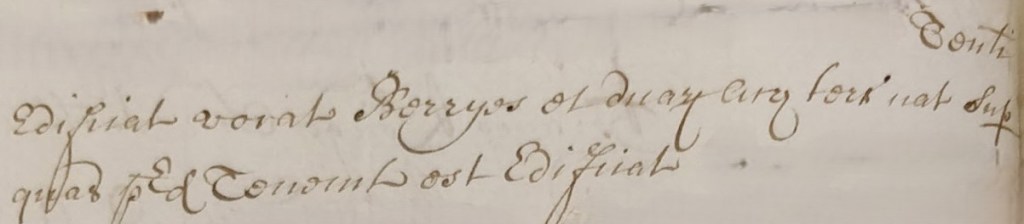
All rights reserved by Norfolk Record Office who hold the original; their reference is NRO MC 639/1 795X9
1725
The Court of the Manor of Deopham Hall held on November 26th 1725 referred to “a built tenement called Berrys with 2 acres of copyhold land”. This land and tenement (and much more besides) passed from Arthur Branthwayte to his brother Miles Branthwayte. The Branthwayte family was based in Hethel.
1742
On October 19th 1742 the Court of the Manor of Deopham Hall admitted James Cooper of Deopham – Yeoman – to “2 acres of copyhold land upon which a Tenement is built called Berrys”.
1778
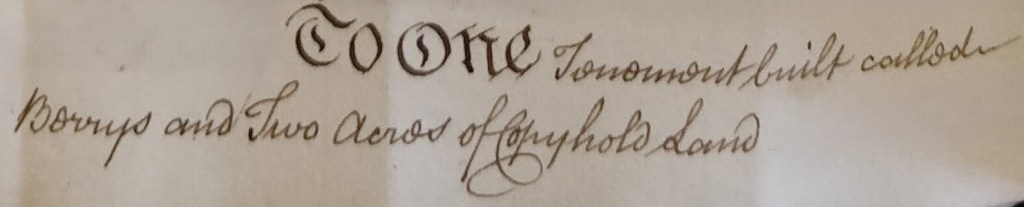
At the Court of the Manor of Deopham Hall held on July 30th 1778 it was recorded that James Cooper of Deopham, Yeoman, had surrendered a package of lands – including Berrys – to John Lane of Deopham, Farmer:
1795
At the Court of the Manor of Deopham Hall held on March 2nd 1795 it was recorded that John Lane of Hingham, late of Deopham, Farmer, had surrendered a parcel of land including Berrys with two acres of copyhold land to John Rudd of Deopham, Yeoman.

1797
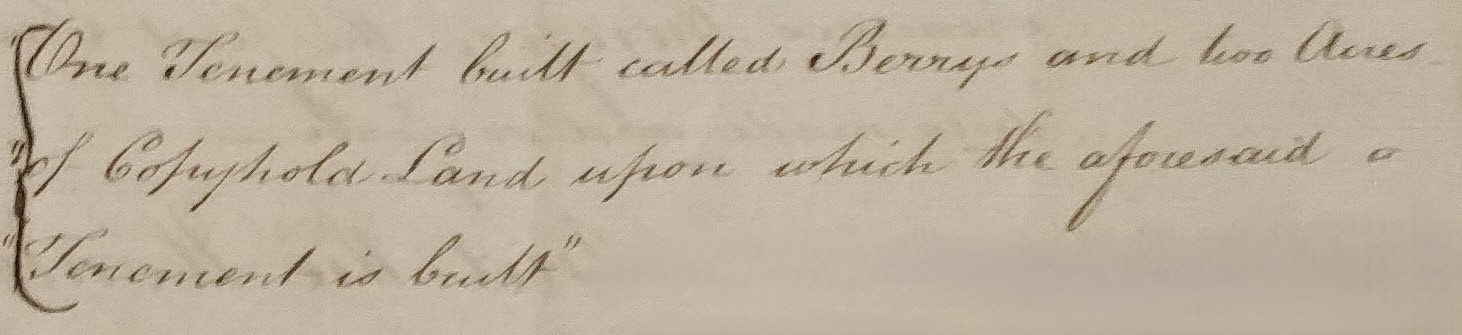
The Court Roll for the Court of the Manor of Deopham Hall held on March 23rd 1797 recorded that John Steward of Norwich purchased a package of properties which included a tenement called Berrys with 2 acres of land:
1798
The Court Roll for the Court of the Manor of Deopham Hall held on February 13th 1798 recorded that “one tenement built called Berrys” was part of a package of properties on which Isaac Easton raised a mortgage of £150 + interest from John Taylor of Deopham.
1801
The Court Roll for the Court of the Manor of Deopham Hall held on January 20th 1801 recorded that Isaac Easton of Deopham, yeoman, and Mary his Wife surrendered “2 acres of Copyhold Land on which is built a Tenement called Berrys” to Taylor Phenix of Deopham, thatcher.
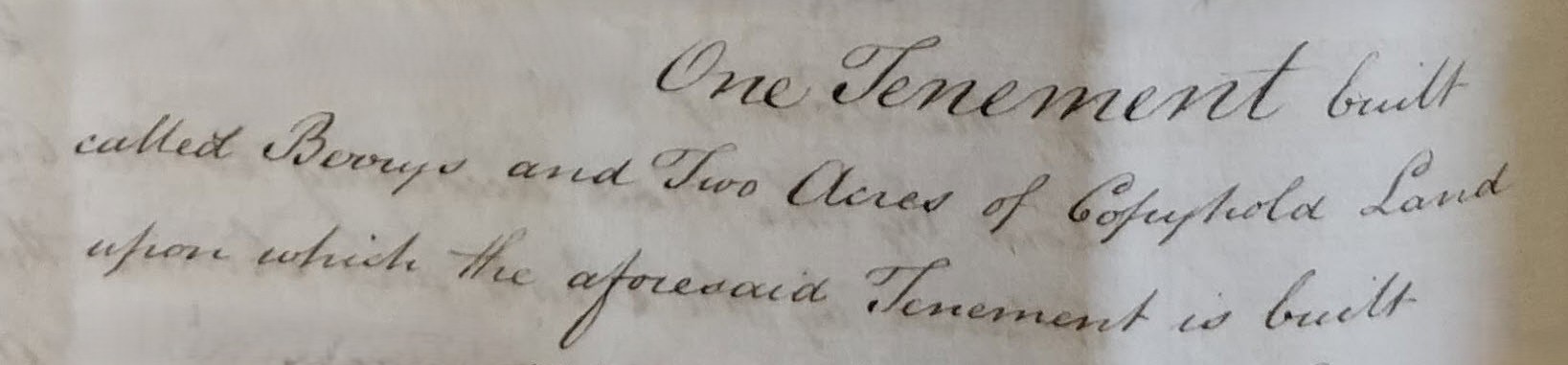
All rights reserved by Norfolk Record Office who hold the original;
their reference is NRO MC 639/3 795X9
1814 Inclosures
The Inclosures Commission
The map drawn up after the Inclosures Commissioners had completed their work shows the farm made up of two pieces in the tenure of Taylor Phenix but copyhold of the Manor of Deopham Hall. This map also shows that access was from a track running through the property to the Wymondham Road.
| Piece No | Acreage |
|---|---|
| 28 | 3 roods & 32 perches |
| 29 | 6 acres & 10 perches |
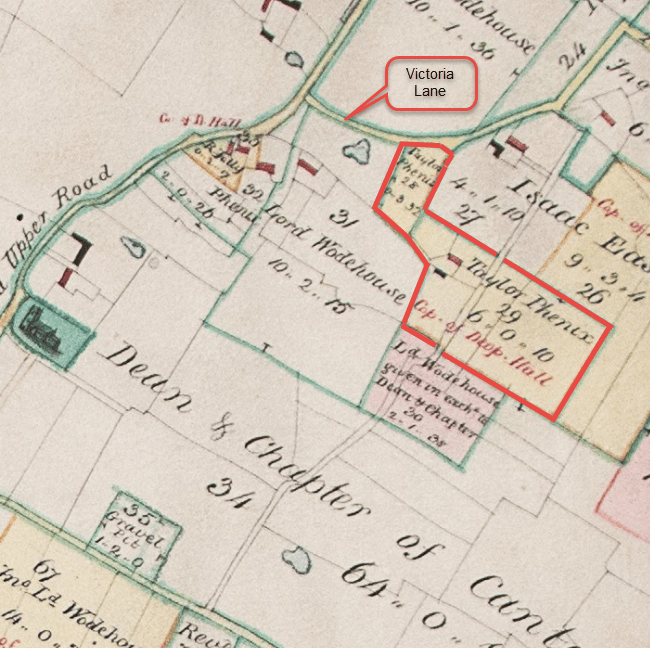
All rights reserved by Norfolk Record Office who hold the original; their ref is NRO C/Sca 2/86
… We set out and allott unto Taylor Phenix the two pieces of land next herein after described, namely:-
First, one piece of land marked on the map hereto annexed No. 28 containing three roods and thirty two perches bounded
– by the second Private Road north,
– by land allotted to Isaac Easton in part and the next described allotment in part, east, and
– by land allotted to John Lord Wodhouse south and west;
Second, one other piece of land marked on the map hereto annexed No. 29 containing six acres and ten perches with a messuage and other buildings standing theron, bounded
– by land allotted to Isaac Easton north and
– by land allotted to The Dean and Chapter of Canterbury and by land allotted to John Lord Wodehouse, and hereinafter given in exchange to The Dean and Chapter of Canterbury, respectively in part south, by land allotted to the said John Lord Wodehouse on the remaining part of the south and in part west and
– by the last described allotment on the remaining part of the west.
And we direct the said Taylor Phenix to make and keep in repair the fences in his said allotments next herein after described, namely:-
– In his first allotment, against the allotment to the said John Lord Wodehouse and against the Private Road, and
– In his second allotment, against the allotment to Isaac Easton.
And whereas the said Taylor Phenix stands admitted to a messuage and four acres of land which are held of the Lord of the Manor of Deopham Hall by copy of Court Roll,
Now we declare that the whole of his said first allotment containing three roods and thirty two perches, and the whole of his second allotment containing six acres and ten perches with the messuage and other buildings standing thereon shall be held by the said Taylor Phenix of the Lord of the said Manor of Deopham Hall by Copy of Court Roll in lieu of the copyhold hereditaments to which the said Taylor Phenix so stands admitted and in respect of the rights of common appendant or appurtenant thereto.
The Court of the Manor of Deopham Hall
The Court Roll for the Court of the Manor of Deopham Hall held on April 7th 1814 described the land occupied by Taylor Phenix of Deopham – thatcher – as follows:
| Before Enclosure | After Enclosure |
|---|---|
| 1) 2 acres with a tenement called Berry’s; 2) 2 acres in a Pightle between land of Edward Cock West & Robert Cock East. | 1) 3 roods & 32 perches – piece no 28 on the 1814 map; 2) 6 acres & 10 perches with a messuage & other buildings – piece no 29 on the 1814 map. |
1866 Enfranchisement
At the Court held on April 6th 1866 for the Manor of Deopham Hall, it was recorded that following the death of Taylor Phoenix (who had owned this farm at the time of the Inclosures), Robert Phoenix, son & heir of Taylor Phoenix, was admitted as a copyhold tenant of this farm.
Shortly afterwards, on April 14th 1866, Robert Phoenix presented to the Court a Deed of Enfranchisement showing that he had paid £56 4s 3d to be relieved of all Copyhold obligations. The farm was then his without any strings attached: “for ever freed and for ever discharged from all fines, heriots, rents, reliefs, fealty, suit of Court, amerciaments, forfeitures and other customary payments, duties and services whatsoever”.
One consequence of this enfranchisement was that the farm was not subsequently mentioned in Court Rolls.
1911 Census
The census taken in 1911 recorded that the Wigby family (husband, wife and a 10 month old daughter) were living at Ivy Farm. There was also a boarder whose occupation was recorded as being a shepherd.
1929-1937 Kelly’s Directories
The edition of Kelly’s Directory published in 1929 listed John William Palmer as the occupant of Ivy Farm, and his occupation as being a poultry farmer.
The next edition, published in 1933, still listed J. W. Palmer, but as well as identifying him as a poultry farmer, it described him as a breeder of White Aylesburys – a large duck with pure white plumage.
The 1937 edition again listed J. W. Palmer, but without mentioning the ducks.
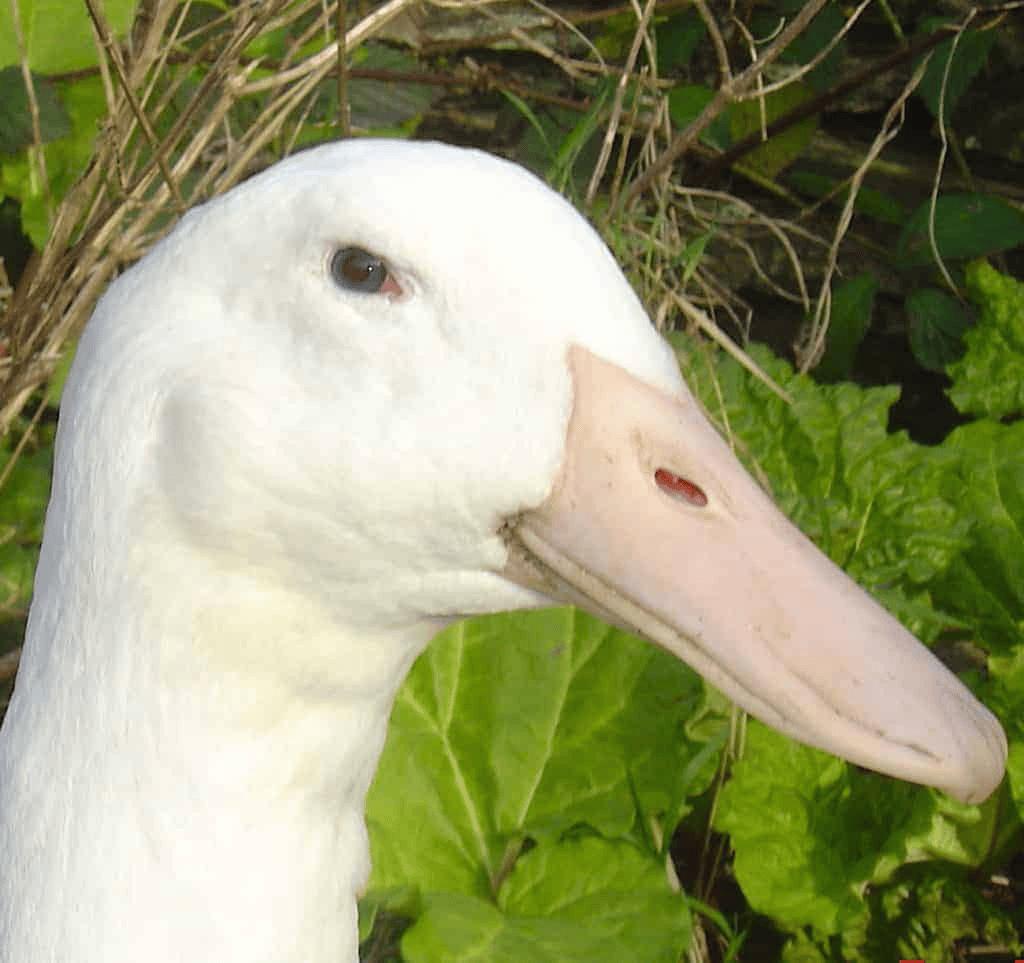
Photo: Simon James
1941 Farm Survey
The 1941 farm survey recorded that John William Palmer was the farmer and owner of Ivy Farm and that it had been in his occupation for 21 years at that time. The farm comprised 8¼ acres, had no electricity and no mains water supply.
It was recorded that there were 50 fowls over 6 months old and 5 geese on the farm.
The following extract is taken from the 1941 survey; the Ivy Farm land is shown in pink and labelled 194/28:
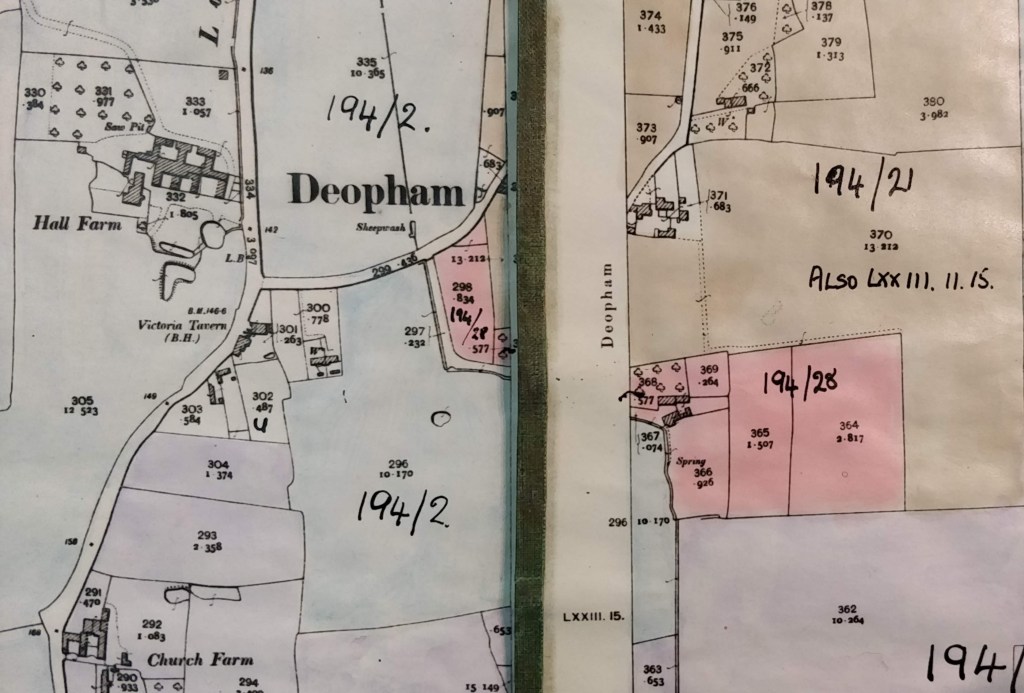
© National Archives, Kew. Their refs: MAF 73/28/73+85
1974 Recruitment
The following advertisement gives the address as “Sandpit Lane”.
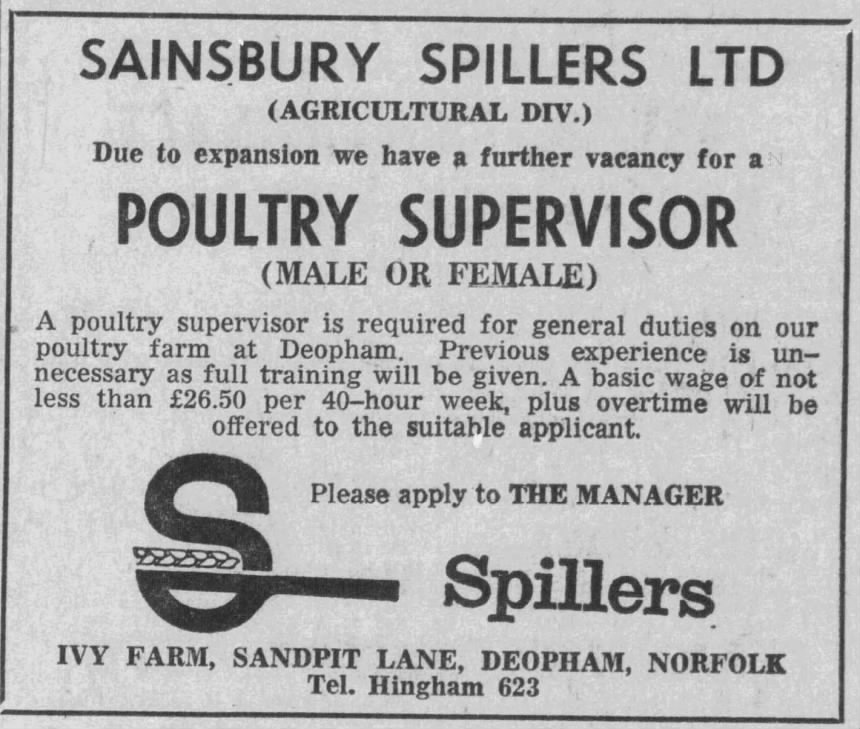
Eastern Daily Press, May 17th 1974
1977 Recruitment
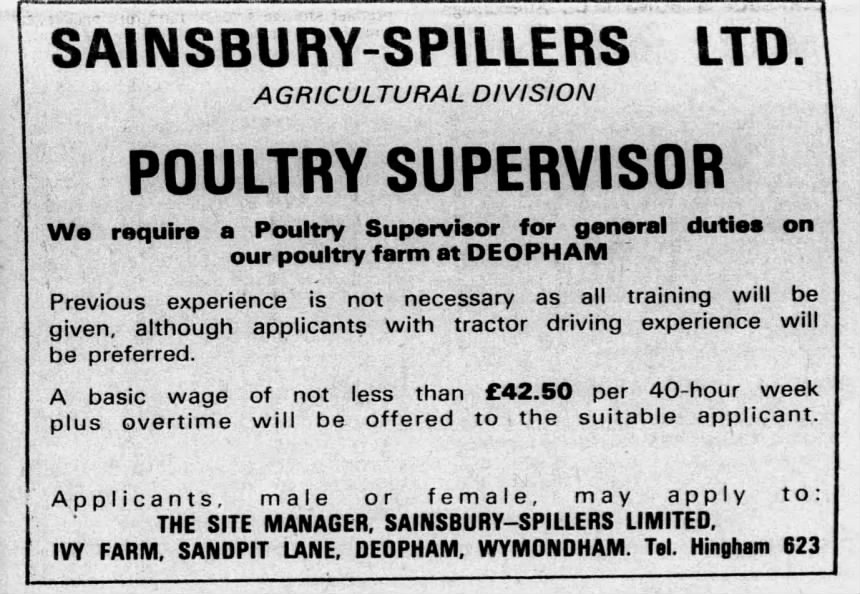
Eastern Daily Press, February 24th 1977
1980 Recruitment
The following advert is part of a larger advert placed by Sainsbury Spillers Ltd, Agricultural Division, on January 4th 1980:
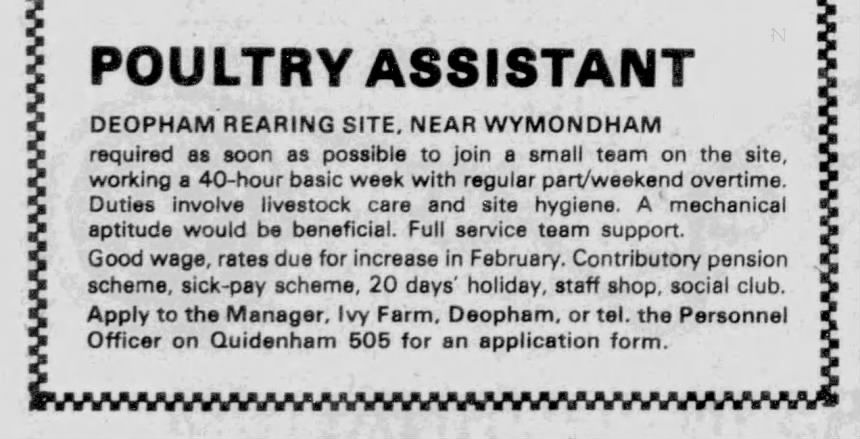
Eastern Daily Press, January 4th 1980
2000 Fire
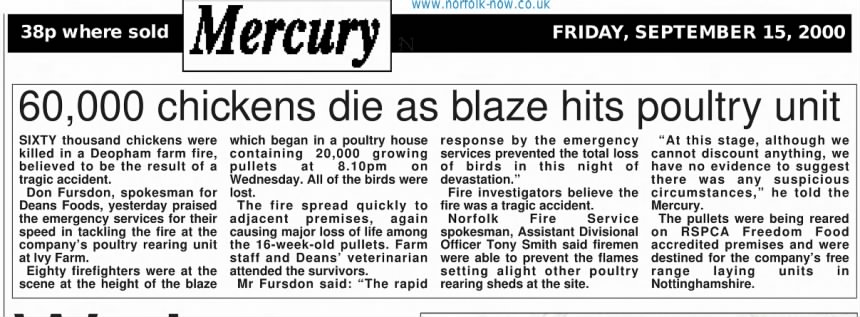
Wymondham and Attleborough Mercury, September 15th 2000
After the fire
Following the fire, the site was redeveloped as a poultry farm for pullet rearing using a tiered cage system. The site held a permit for a maximum stocking density of 103,000 birds, although the average in 2016 was 97,689 birds.
The following image from September 11th 2006 shows the arrangement of buildings at that time:
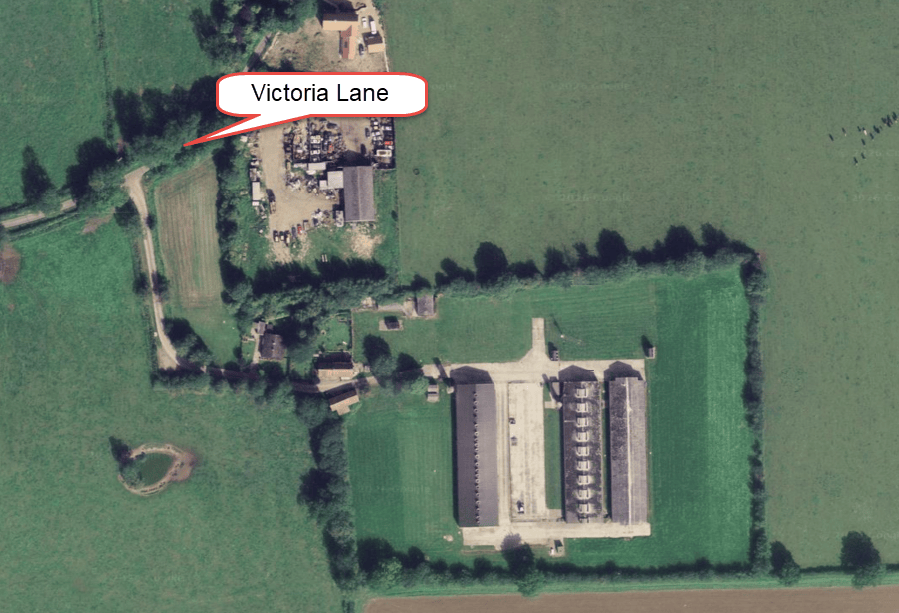
Image: Google Earth
2018 Redevelopment
The poultry unit ceased to be active at the end of 2016 and then stood empty for 18 months.
On October 11th 2018 a planning application1 was approved to replace the existing three sheds with five new sheds for the rearing of pullets from day old chicks to point of lay, a period of 16-17 weeks. The five identical buildings would each house 11,400 birds, making a total of 57,000 chickens.
The application was submitted by E C Drummond (Agriculture) Ltd. in Hertfordshire.
The following image shows the site after this development had been completed:
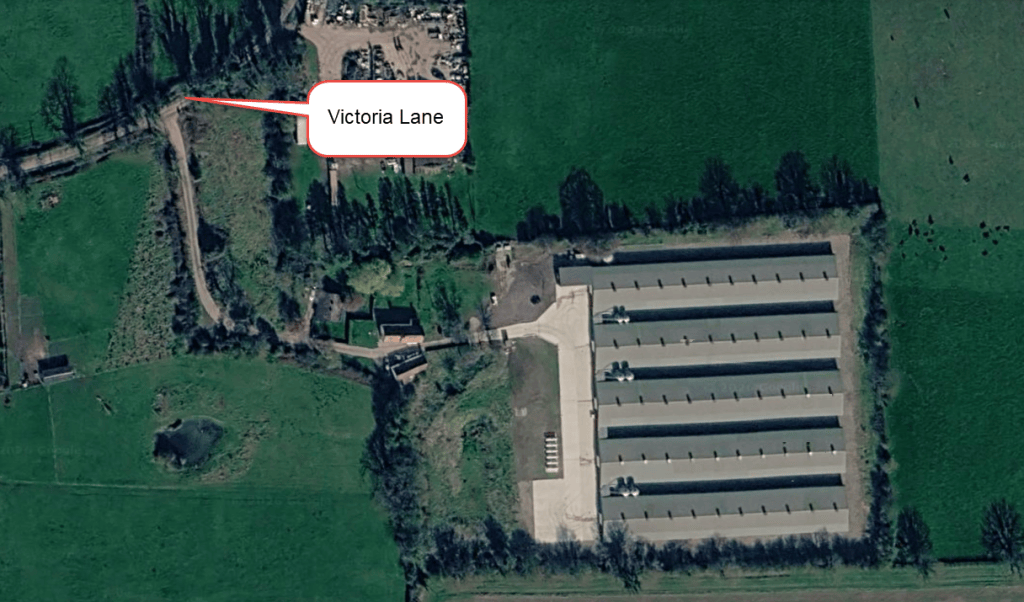
Image: Google Earth
2023 Farmhouse renovation
Ivy Farmhouse during renovation in 2023:
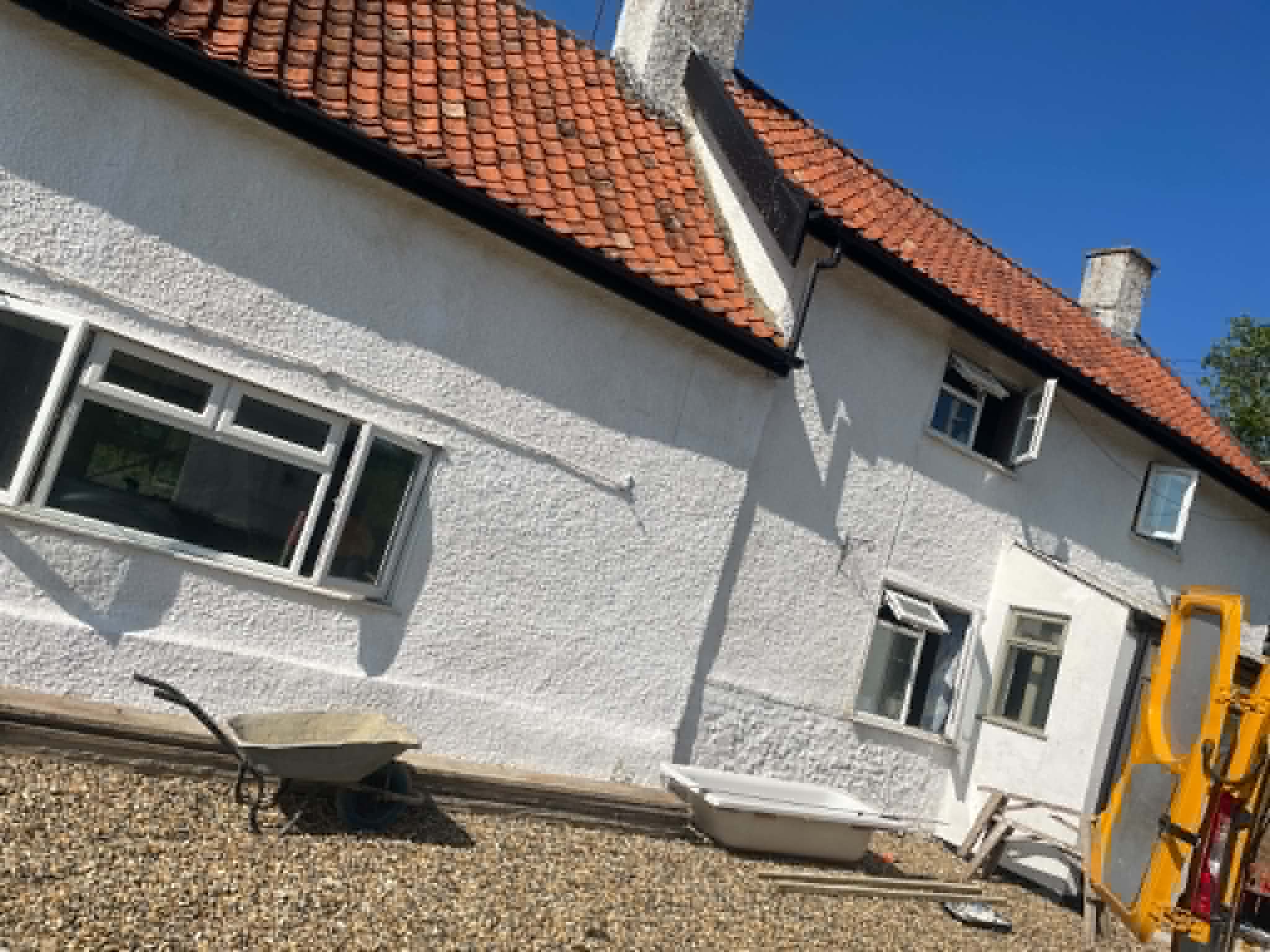
Photo: Lauren Garner
2026
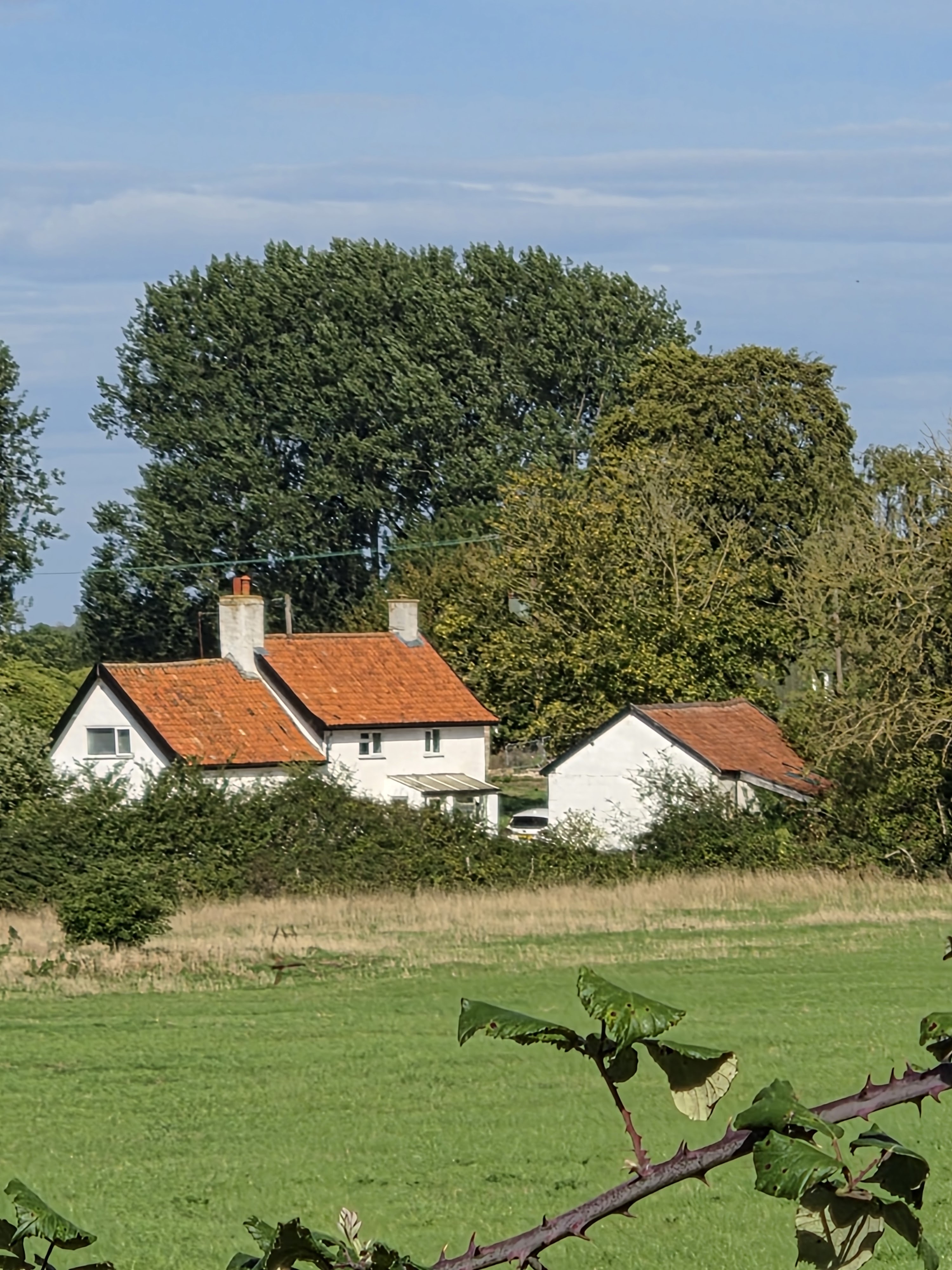
Photo: G. Sankey, September 2026
Footnotes
- South Norfolk Planning Ref 2018/1516 ↩︎
Navigation
| Date | Change |
|---|---|
| 11/10/26 | 1977 advert |
| 5/10/26 | Published |

