Contents
Sale of the Manor
In February 1649 an act was passed abolishing the office of king, following on from the execution of Charles I. The Church of England was also abolished, and its assets sold off. The republic, under the leadership of Oliver Cromwell, lasted until 1660 when Charles II was enthroned. In that year, the 1650 acts became known as “pretended acts” and were cancelled by “An Act of Free and General Pardon, Indemnity, and Oblivion”. This reinstated the Church of England, and returned all its assets.
The indenture below of 1650 relates to the sale of the Manor of Deopham of the Dean & Chapter of Canterbury following the abolition of the Church of England. No Deopham documents have been identified relating to the restitution of the Dean and Chapter of Canterbury in 1660.
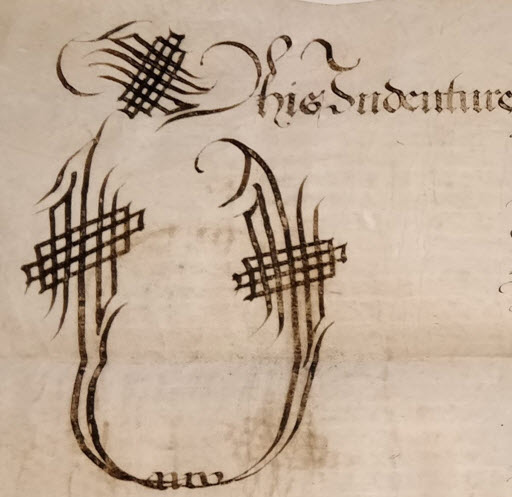
This Indenture made the Nynteenth day of December in the yeare of our Lord God according to the computation of the Church of England One Thousand Six Hundred and fiftie
Between Sir John Wollaston knight, Robert Titchborne, Thomas Noell, Marke Hildesley, Stephen Estwicke, William Hobson, Thomas Arnold, Owen Roe, George Langham, John Stone, John White, William Wyberd, Daniell Tayler and Rowland Wilson Esquires, Trustees nominated in an act of this present parliament intituled an Act of the Commons of England in parliament assembled For the abolisheing of Deanes, Deanes and Chapters, Cannons, Prebends and other offices and Titles of, or belonging to, any Cathedral or Collegiat Church or Chappell within England and Wales1,
And by another act of the same parliament Intituled an Act for the Sale of the Mannors of Rectoryes and Gleabe Lands late belonging to Archbishopps, Bishopps, Deanes, Deanes and Chapters2 authorized to Convey such if the said Mannors of Rectoryes and such Messuages, Tenements, Gleabe Lands, Pastures, Meadows and Marishes belonging to Rectoryes impropriate As by the said last mentioned act are vested in them and their heires in such sorte as in the same Act is mentioned of the One parte And William Rolfe of London Esquire of the other parte
Witnesseth that the said Sir John Wollaston knight, Robert Titchborne, Thomas Noell, Marke Hildesley, Stephen Estwicke, William Hobson, Thomas Arnold, Owen Roe, George Langham, John Stone, John White, William Wyberd, Daniell Tayler and Rowland Wilson3
In obedience to the said last mentioned Act and by vertue thereof and in execution of the Power and Trust thereby Committed to, from And at the desires and by the warrant of Sir William Roberts Knight, Dr William Parker, Thomas Ayres, Roger Smith and Edward Cressett Esquires who together with others named in the said first mentioned act or any Five of more of them are by the said last mentioned act Authorized to treate Contract and agree for the Sale of the said Premisses in such sorte as in the said Acts respectively is mentioned
And in Consideration of the summe of Five hundred and Twentie pounds and Tenne Shillings of Lawfull Money of England which the said Thomas Noell and William Hobson, Two of the Treasurers by the said first mentioned act authorized to receive the same have by writeing under their hands bearing date the Seventeenth day of this present Moneth of December now produced by the said William Rolfe and remaining with him Certified to be paid and satisfied by him in such sorte as by the same writeing appeares
Have grannted, aliened4, bargained, sold, remised and released And by theise presents doe grannt, alien, bargaine, sell, remise and release unto the said William Rolfe, his heires and Assignes
All that the Mannor of Deopham with the Rights, members and appurtenances thereof in the County of Norfolk
And all quitt rents and Rents of assise to the said Mannor belonging or in any wise appertaining
And all that Capitall Messuage or Tenement there commonly called or knowne by the name of the Mannor or Parrsonage house of Deopham Together with the Close wherein the said Capitall Messuage is situate and built, commonly called the Mannor or Parsonage yard
And all houses, edifices, buildings, outhouses, Courte yards, Gardens and Orchards to the same belonging and appertaineing Containeing altogether by estimation Four Acres more or lesse
And all that Close of pasture there Commonly called the Culouresters abutting to the Highway there towards the West and to the Lands of John Amyas on the East conteyning by estimation One Acre and Two Roodes more or lesse
And all that Close of Pasture there commonly called the Thirteene acres abutting upon the Highway there on the North and the polleway on the South Containing by estimation Thirteene acres more or lesse
And all that close of arrable Land there commonly called or knowne by the name of Squires abutting to a certaine Lane there called Tungate Lane on the West and to the Lands Late of Nicholas Thrould on the East Containing by estimation Seven acres more or lesse
And all that Little Cottage and Close of arrable Land thereunto adjoyneing with their and everie of their appurtenances commonly called Hawfeild abutting to the Lands late of Francis Bubbin on the west and to a certain Common called Tungreene Common on the East Containing by estimation Foure acres more or lesse
And all that parcell of arrable Land there commonly called Hill Holland abutting upon Master Skipper’s Land on the North and to a certaine Common called Southill on the South Containing by estimation Foure Acres more of lesse
And all these Twentie Six peeces of Parcells of arable Land lyeing and being in a certaine Common Feild there called Church Feilds Containing by estimation Thirtie Acres more or lesse
And all Courts Leetes, Viewes of Franck Pledge, Courts Baron and other Courts whatsoever, Forfeitures of cheats, reliefes, Herriotts,5 Fines, Issues, amerciaments, perquisitts and profitts of Courts and Leets, Goods and Chattells of Fellons and Fugitives, Felons of themselves, outlawed persons, Clerks convicted and of persons putt in exigent, waifes, estrayes, Deodands,6 Rivers, Streames, waters, Watercourses, Commons and Common of Pasture, Hawking, hunting, fishing, Fowleing Rights, royalties, jurisdictions, Liberties, Priviledges, Immunities, profitts, Commodities, advantages, emoluments, possessions and hereditaments whatsoever with their and everie of their appurtenances of what nature or qualitie soever they be to the said Mannor Lands and Premisses and to everie or any of them belonging or in any wise appertaining
And which the Late Deane and Chapter of the Late Cathedrall Church of Canterbury or any [of] their Predecessors in right of the same Deane and Chapter or of any other person or persons Claymeing by from or under them or any of them their or any of their Estates at any time within the space of Tenne yeares next before the beginning of this present Parliament or since had held, occupied or enjoyed within the said Mannor & Lands and Premisses and everie or any of them which said Mannor Lands and Premisses are mentioned in the particular thereof to thause[?] beene Late Parcell of the possessions of the late Deane and Chapter of the said late Cathedrall Church of Canterbury and to be of the present yeares value of Six and Twentie Pounds and Six pence
And the Reversion and Reversions, Remainder and Remainders of the said Mannor, Capitall, Messuage, Lands and premisses and of every parte and parcell thereof
And all the Estate, Right, Title and Interest of them from the said Sir John Wollaston, Robert Titchborne, Thomas Noell, Marke Hildesley, Stephen Estwicke, William Hobson, Thomas Arnold, Owen Roe, George Langham, John Stone, John White, William Wyberd, Daniell Tayler and Rowland Wilson of in and to the said Mannor, Capitall, Messuage, Lands and Premisses and everie of them
(Except and always reserved out of this present bargaine, Sale and Conveyance:
All Messuages, Cottages and Lands in possession or Reversion parcell of the Mannor aforesaid not herein before particularly mentioned other than customary Lands or Tenements holden by Coppie of Court Roll, Commons and grounds used for Common wayes and wast grounds and alsoe except all Tythes appropriated Oblucions7, Obreucions[?], portions of Tythes, Vicaridges, Churches, Chappells, advowsons8, Donatives9, Nominations, Rights of Patronage and Presentation,
And all other Things in or by the said acts or any of them saved or excepted, or appointed to be saved or excepted, or not to be sold other than the Capitall, Messuage, Lands and premisses abovementioned)
To have and to hold the said Mannor, Capitall, Messuage, Lands, Tenements and hereditaments
And all and singular the premisses hereby granted, aliened, bargained or sold or herein before mentioned to be hereby grannted, aliened, bargained or sold with their and every of their Rights, members and appurtenances (Except before excepted) unto the said William Rolfe his heires and assignes forever
To the only use and behoofe10 of the said William Rolfe, his heires and assignes for ever
As amply as the said Trustees or any Five or more of them by the said last mentioned Act are enabled to Convey the same Discharged of all Demands, Payments and Incumbrances
As amply as by the said Acts or either of them it is enacted or provided in that behalfe
In witness whereof the said parties to theise Indentures interchangeably have sett their Seals ?oven the day and yeare first above written.
From a document held by the Chapter of Canterbury, their ref CCA-DCc/PET/332
Transcription © G. Sankey
Footnotes
- Full title of the Act dated April 1649: An Act for abolishing of Deans, Deans and Chapters, Canons, Prebends and other offices and titles of or belonging to any Cathedral or Collegiate Church or Chappel within England and Wales. ↩︎
- Full title of the act dated October 1650: An Act for the more speedy effecting the Sale of the Manors of Rectories and Gleab-Lands, late belonging to Archbishops, Bishops, Deans, Deans and Chapters, and other Offices and Titles, which late were of or belonging to any Cathedral, or Collegiate Church or Chappell with England or Wales: And for the better encouragement of Lenders upon the security thereof, and of other Lands and Hereditaments of the said Deans, Deans and Chapters. ↩︎
- The Act of 1649 required five of the “contractors” to agree to any sale of property. Twelve contractors are named in the act of whom five are listed in this indenture. ↩︎
- Aliened – to transfer the title of (property) ↩︎
- A Herriott was the right of a lord in feudal Europe to seize a serf’s best horse, clothing, or both, upon his death. ↩︎
- A Deodand was an item of personal property, such as a horse or a haystack, which a coroner’s jury had decided was responsiible for the death of a human being. ↩︎
- Oblucions – religious gifts ↩︎
- Advowsons – the right to appoint clergy ↩︎
- Donative – a gift or donation ↩︎
- Behoofe – advantage or benefit ↩︎
Navigation
| Date | Change |
|---|---|
| 9/6/25 | Correction of typos |
| 9/2/24 | Published |
 Deopham History